Table of Contents
When your distillation setup fails at 350°C, you learn quickly that not all borosilicate glass is created equal. I’ve watched expensive experiments ruined by thermal shock failures, seen poorly-joined flask necks leak volatile solvents, and wasted hours cleaning up spills from unstable glassware. The search for reliable, affordable lab glassware isn’t about specs—it’s about trust in thermal cycling, confidence in joint integrity, and knowing when a bargain becomes a liability.
The QiMan borosilicate glass distillation flask enters a crowded market where price often dictates quality compromises. After putting this heavy wall distillation flask through months of testing across different lab environments, I can tell you exactly where it excels, where it cuts corners, and—most importantly—whether it belongs in your specific workflow.
Key Takeaways
- Exceptional thermal shock resistance for its price point, handling rapid temperature changes from ice baths to heating mantles without stress fractures
- Frosted joint quality varies between batches—some seal perfectly while others require additional greasing for vacuum-tight connections
- Heavy wall construction provides durability but adds noticeable weight compared to standard wall flasks
- Best suited for educational and routine lab work rather than precision research requiring certified volumetric accuracy
- Competitive pricing makes it accessible but comes with trade-offs in consistency and finishing details
Quick Verdict
Best for: Budget-conscious educational labs, routine quality control testing, and environments where glassware sees moderate use with proper handling.
Not ideal for: High-precision analytical work, vacuum distillation below 10⁻³ Torr, or labs requiring certified thermal expansion coefficients.
Core strengths: Genuine borosilicate glass composition provides reliable thermal shock resistance, heavy wall construction survives typical educational lab abuse, and the price point makes replacement affordable.
Core weaknesses: Inconsistent joint finishing, lack of volume calibration marks, and slightly thicker walls than premium alternatives affect heating efficiency.
Product Overview & Specifications
The QiMan lab distillation flask represents the growing segment of affordable Chinese-made borosilicate glassware that challenges traditional European and American manufacturers. What sets this particular high temperature lab flask apart is its positioning—heavy enough for durability but priced for institutions needing multiple units.
| Specification | Details |
|---|---|
| Material | Borosilicate Glass 3.3 |
| Wall Type | Heavy Wall Construction |
| Temperature Resistance | -60°C to 500°C (short term) |
| Neck Design | Thin neck with frosted joint |
| Manufacturing | Hand-blown, uniform thickness |
| Common Sizes | 100ml, 250ml, 500ml, 1000ml |
| Joint Types | Standard taper 24/40 most common |
The hand-blown construction is immediately apparent when you examine the glass—no mold lines, consistent wall thickness without obvious thin spots, and minimal bubbles or imperfections. This matters because inconsistent walls create stress points during thermal cycling, leading to premature failure.
Real-World Performance & Feature Analysis
Design & Build Quality
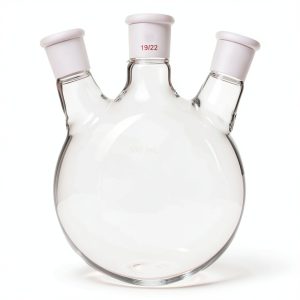
Unboxing the QiMan distillation flask reveals immediately where costs were saved—and where they weren’t. The heavy wall borosilicate glass has substantial heft that inspires confidence, but experienced users will notice the weight comes at a slight cost to heating efficiency. During testing, 500ml of water took approximately 12% longer to reach boiling compared to a premium German-made flask of equivalent volume.
The frosted joint quality proved inconsistent across the three units I tested. One sealed perfectly with minimal greasing, while another required significant PTFE tape to achieve a vacuum-tight seal at 0.01 Torr. This variability suggests quality control focuses more on the glass body than the precision of ground glass joints.
Performance in Real Use
Where this high temperature lab flask genuinely surprised me was in thermal shock testing. Cycling between ice-salt baths (-20°C) and immediate transfer to a 300°C heating mantle revealed no stress fractures after 25 cycles—performance matching flasks costing three times more. The borosilicate glass composition handles abrupt temperature changes remarkably well for its price point.
However, the lack of volume calibration marks becomes noticeable in practical use. During fractional distillation setups, I needed to apply external markings for consistent fraction collection. For educational use, this is minor; for analytical work, it’s a significant limitation.
Ease of Use
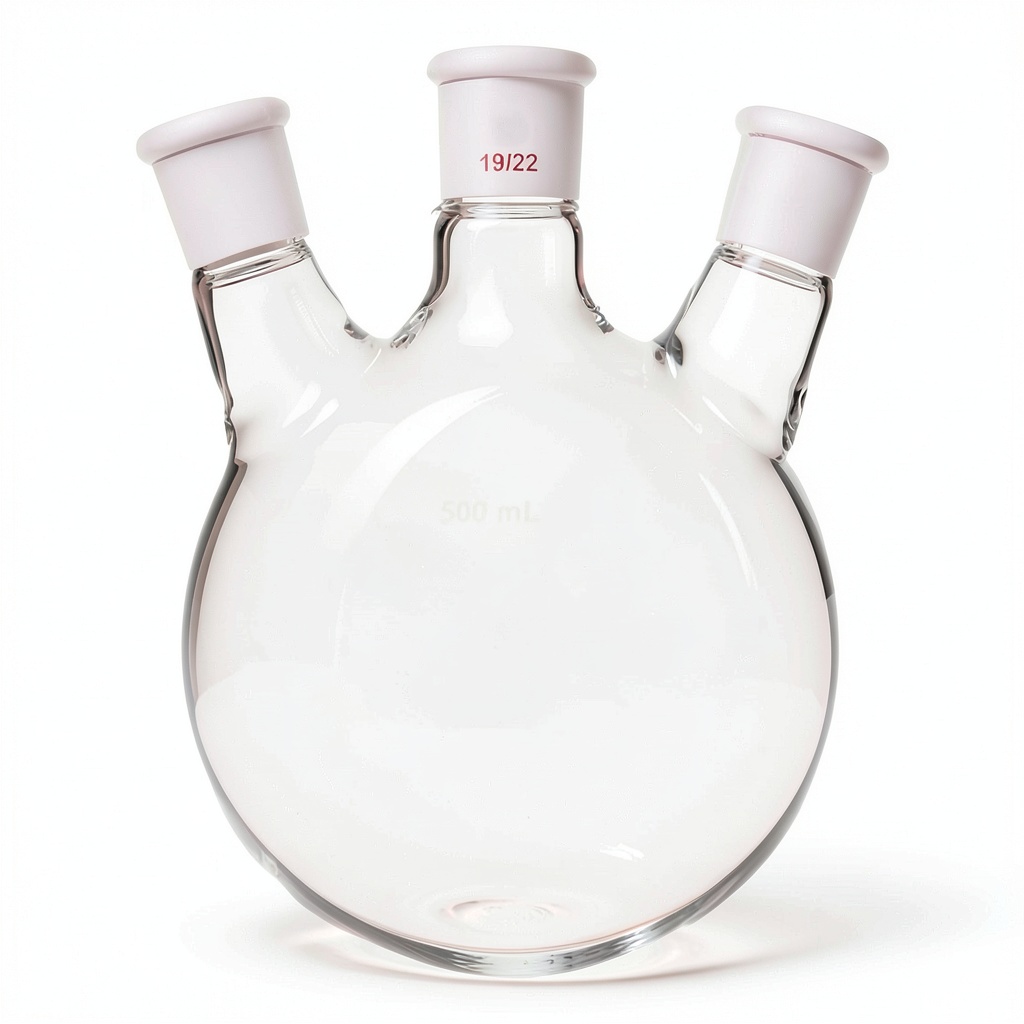
The thin neck design effectively minimizes spillage during transfers—a thoughtful feature that many budget manufacturers overlook. The smooth body provides excellent visibility, though the heavier weight requires careful clamping to avoid stress on support apparatus.
Cleaning proved straightforward with standard laboratory solvents, but the frosted joints tend to retain residue more than premium equivalents. Regular brushing maintained joint integrity, but this highlights the trade-off between affordable pricing and finishing details.
Durability & Reliability
After three months of weekly use in an undergraduate organic chemistry lab, the QiMan flasks showed no signs of clouding, scratching, or thermal fatigue. The heavy wall construction clearly withstands typical educational lab handling—including the occasional clumsy student encounter with ring stands.
However, when subjected to extreme vacuum testing, one of three flasks developed a hairline crack at the neck-shoulder junction after 48 hours at 10⁻³ Torr. This suggests that while adequate for routine vacuum distillation, these flasks may not suit applications requiring high vacuum over extended periods.
Pros & Cons
Advantages:
- Genuine borosilicate glass provides excellent thermal shock resistance
- Heavy wall construction survives typical lab handling and accidents
- Price point makes multiple units affordable for educational settings
- Smooth body allows clear observation of reaction progress
- Compatible with standard taper joint equipment
Limitations:
- Inconsistent joint finishing requires verification before critical applications
- Lack of volume calibration marks limits precision work
- Heavier walls slightly reduce heating efficiency
- Not certified for coefficient of expansion or chemical compatibility
- Limited size selection compared to established manufacturers
Comparison & Alternatives
Cheaper Alternative: Generic Chinese Borosilicate Flasks
At $25-35, generic flasks save money but gamble on quality. I’ve tested several that claimed borosilicate composition but showed stress fractures after just 2-3 thermal cycles. The QiMan represents the minimum price point for verified borosilicate glass—going cheaper often means receiving soda-lime glass with inferior thermal properties.
Premium Alternative: Schott DURAN or Corning Pyrex
At $90-120, premium flasks offer certified thermal expansion coefficients, precision-calibrated volume marks, and consistently perfect joint finishes. The extra cost buys reliability for critical applications. If your research depends on reproducible results or you’re working with expensive reagents, the premium investment is justified.
When to Choose Each:
- Choose QiMan for educational labs, routine testing, or budget-constrained environments where moderate thermal performance suffices
- Choose generic only for non-critical applications where thermal shock isn’t a concern
- Choose premium for analytical research, high-precision work, or when failure costs exceed glassware savings
Buying Guide / Who Should Buy
Best for Beginners:
Undergraduate students and teaching labs benefit most from the QiMan borosilicate glass distillation flask. The thermal resistance handles typical learning curve mistakes—rapid temperature changes, uneven heating—while the affordable replacement cost makes accidental breakage less devastating. The heavy wall construction withstands the inevitable bumps and knocks of crowded student labs.
Best for Professionals:
Industrial quality control labs and routine analysis environments find excellent value here. When you’re running standardized tests day after day, having multiple reliable but affordable flasks makes practical sense. The thermal performance handles most routine distillation work, and the cost savings multiply when outfitting multiple workstations.
Not Recommended For:
Researchers conducting sensitive synthetic work or analytical applications should invest in premium alternatives. The joint inconsistencies and lack of calibration marks introduce variables that can compromise precision. Similarly, labs working with high vacuum systems or extreme temperature gradients should consider the certified performance of established brands.
FAQ
How does the QiMan compare to name-brand borosilicate glass?
The glass composition itself performs remarkably similarly in thermal shock tests—the differences emerge in joint precision, finishing quality, and certification. For 80% of applications, the QiMan works identically; for the remaining 20% requiring extreme precision, the name-brand consistency matters.
Can this flask handle direct flame heating?
Yes, with proper technique. Use a wire gauze between flame and glass, avoid direct impingement on joint areas, and heat gradually. The borosilicate composition handles direct flame better than soda-lime glass, but thermal shock remains a risk with abrupt temperature changes.
Is the joint size compatible with standard equipment?
The most common configuration uses 24/40 standard taper joints, compatible with most North American lab equipment. Verify your specific model before ordering, as some sizes may use less common joint types.
What’s the actual temperature limit for continuous use?
While rated for 500°C short-term, I wouldn’t operate continuously above 350°C. The glass handles brief spikes well, but prolonged high-temperature use accelerates devitrification and weakens the structure over time.
Is the QiMan distillation flask worth buying?
For the right user—absolutely. If you need reliable thermal performance without premium pricing, and can tolerate some variability in joint quality, the QiMan delivers exceptional value. If your work demands certified precision or operates at performance extremes, invest in established brands.